


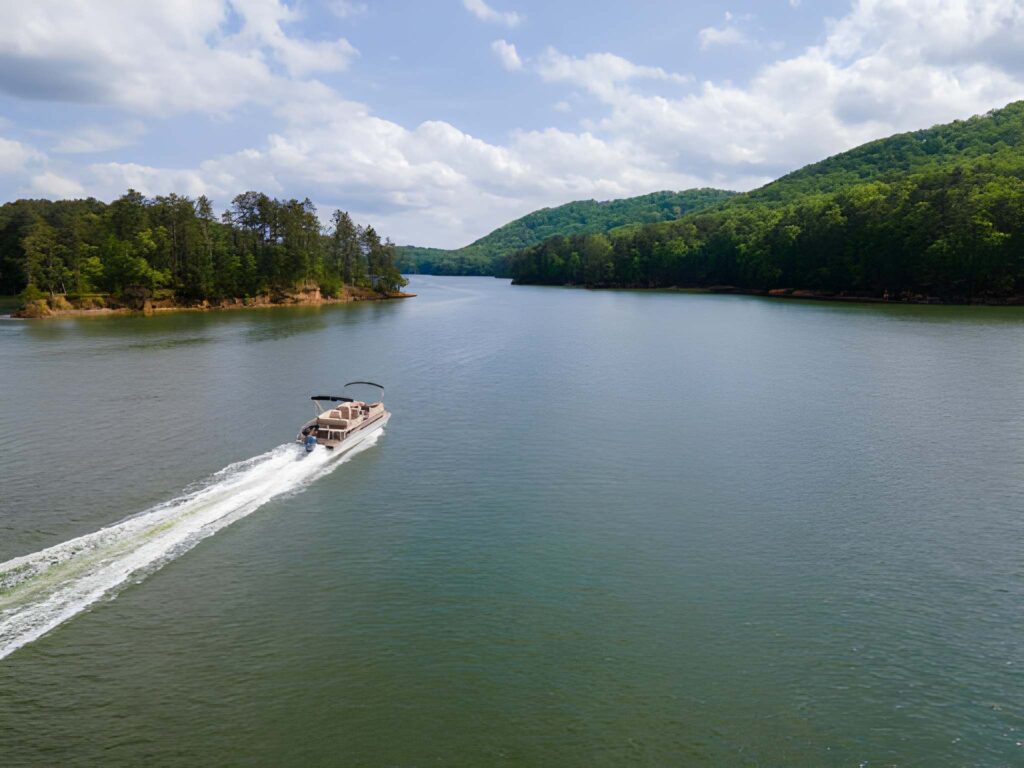
Pontoon boats are widely appreciated for their comfort, stability, and versatility. They are perfect for cruising, fishing, entertaining, and watersports. But one question every pontoon owner eventually asks is: “How fast can my pontoon go, and what affects its performance?” Unlike speedboats, pontoon boats are not purely built for speed, but understanding the factors that influence velocity, how load affects handling, and what speeds are ideal for different watersports can transform your boating experience.
This guide dives deep into everything you need to know about pontoon boat speeds, from real-world examples and load considerations to engine setups, hull design, watersport requirements, and safety tips.
Real-World Pontoon Boat Speeds
Pontoon speeds vary based on engine power, pontoon length, hull design, and overall weight. Smaller 16-18-foot pontoons with 60-70hp engines generally cruise at 18-21 mph, making them ideal for casual cruising, fishing, and light tubing. Mid-sized pontoons (20-24 feet) equipped with 90-115hp engines usually reach 22-25 mph under moderate load.
Performance pontoons, especially tritoons or those with lifting strakes, can exceed 35 mph under light load and a powerful engine, making them suitable for skiing or wakeboarding. Conversely, luxury or oversized pontoons, despite large engines, may only reach 15-20 mph due to additional weight and drag.
Examples of typical pontoon speeds under varying conditions
| Pontoon Model | Engine | Load | Approx. Speed |
|---|---|---|---|
| G3 Suncatcher 22′ | 115hp | Medium | 25 mph |
| 21′ Performance Pontoon (lifting strakes) | 90hp | Light | 36 mph |
| 18′ Bass Buggy | 60hp | Medium | 18 mph |
| Suntracker 22′ | 70hp | Light | 21 mph |
| 26′ Tritoon | 175hp | Medium/Heavy | 35 mph |
| Luxury 30′ Pontoon | 115hp | Medium | 15 mph |
These examples show that engine size alone does not determine speed; load, hull type, and pontoon design are equally important.
How Load Impacts Pontoon Performance
Weight is one of the biggest factors influencing a pontoon’s speed and handling. Passengers, fuel, gear, and even accessories contribute to total load. A rough guideline is that every 1,000 pounds of additional weight can reduce speed by 10-15%.
For example, a 22′ pontoon that can reach 29 mph empty may slow to around 25 mph with five or six adults onboard. Uneven weight distribution can further reduce efficiency and negatively impact handling, especially during turns or while waterskiing. For optimal performance, heavy gear should be placed near the boat’s center, and avoid concentrating weight at the bow or stern.
It’s also important to consider how fuel and watercraft accessories affect weight. A full tank of gas can add over 100 pounds, and large coolers, fishing equipment, or wakeboards contribute significantly. Overloading your pontoon not only reduces speed but can also compromise stability and safety.
Engine and Propeller Considerations
The engine is the heart of a pontoon’s performance. Mid-sized pontoons usually operate efficiently with 90-115hp engines, while larger tritoons or pontoon boats over 26 feet may require 150-250hp for optimal performance.
The propeller is equally important. Many new pontoons come with a “safe” prop designed for durability rather than maximum speed. Switching to a prop that better matches the engine’s optimal RPM range can improve acceleration and top speed, but it’s crucial to consult manufacturer specifications before making changes to prevent damage.
Engine tuning, regular maintenance, and ensuring your motor operates within recommended RPMs are all key factors in maintaining peak performance. Small adjustments in prop pitch or diameter can significantly influence both speed and fuel efficiency.
How Water Conditions Affect Speed
Water conditions play a crucial role in pontoon performance. Headwinds slow the boat, tailwinds can slightly boost speed, and choppy water increases drag, reducing both speed and fuel efficiency. Currents in rivers or streams can also impact performance: moving against a current reduces velocity, while traveling with it may slightly increase it.
Even small waves or wakes from other boats can affect top speed, particularly on smaller pontoons. Experienced captains adjust their load, trim, and throttle to compensate for changing conditions, maintaining stability and safe handling.
Hull Design and Pontoon Performance
Hull design is another key factor influencing speed. Performance pontoons with lifting strakes help the boat plane faster, improving acceleration and efficiency at higher speeds. The number of pontoons also matters: tritoons provide additional stability and weight capacity, allowing for higher speeds with heavy loads or when towing skiers.
Length and width influence drag: longer pontoons generally glide more efficiently but require more power to reach higher speeds. Heavily loaded luxury pontoons or models with wide decks may never match the speed of a 22′ performance model, regardless of engine size.
Maintaining clean pontoons is equally important. Algae, barnacles, or debris can reduce speed by 2-6 mph. Regular cleaning and proper winterization help maintain optimal performance year-round.
Recommended Speeds for Watersports
Optimal speed depends on the activity and participant skill level. For casual waterskiing, 15-26 mph is typical, while tubing with young children rarely exceeds 10 mph. Older kids and adults enjoy tubing at 20-25 mph, but higher speeds increase risk. Wakeboarding is safer at 13-18 mph, while slalom skiing generally averages around 22 mph. Barefoot skiing requires a higher speed, often calculated as (weight in pounds ÷ 10) + 20. For example, a 200-pound skier would need around 40 mph.
| Watersport | Recommended Speed |
|---|---|
| Waterskiing | 15-26 mph |
| Tubing (young children) | 5-11 mph |
| Tubing (older kids/adults) | 20-25 mph |
| Wakeboarding | 13-18 mph |
| Slalom skiing | ~22 mph |
| Kneeboarding | 13-20 mph |
| Barefoot skiing | Weight ÷ 10 + 20 mph |
Understanding these ranges helps captains match engine power, load, and pontoon type to each activity, ensuring both fun and safety.
Maximizing Speed Safely
To get the best performance from a pontoon boat without compromising safety, it’s essential to:
- Distribute passengers and cargo evenly, keeping heavy items near the center.
- Maintain pontoons and engines, removing algae and debris and performing routine inspections.
- Choose the correct propeller for your boat’s engine and load.
- Adjust speed for water conditions, including waves, wind, and traffic.
- Consider bimini positioning: lowering the top may slightly reduce drag and improve speed, though usually by only 1 mph.
Proper planning and maintenance not only improve speed but also increase fuel efficiency, stability, and safety for all onboard.
Frequently Asked Questions (FAQ) About Pontoon Boat Speeds
Most mid-sized pontoons (20-24 feet) with 90-115hp engines can reach 22-25 mph under moderate load. Smaller boats with 60-70hp engines generally cruise at 18-21 mph, while performance tritoons or pontoons with lifting strakes can exceed 35 mph in light conditions.
Yes. The more weight on board, the slower the boat will go. As a rule of thumb, adding 1,000 pounds can reduce speed by roughly 10-15%. Even distribution of weight is essential to maintain both speed and stability.
Absolutely. Most pontoon boats with 90-115hp engines can comfortably handle waterskiing, tubing, wakeboarding, and kneeboarding. For barefoot skiing or towing multiple skiers, higher-powered engines and performance pontoons (tritoons or lifting strakes) are recommended.
Lowering the bimini can slightly reduce wind resistance, potentially increasing speed by about 1 mph in most conditions. On extremely windy days, the difference may be slightly higher.
Yes. Algae, barnacles, and other buildup increase drag and can reduce speed by 2-6 mph. Regular cleaning and maintenance are essential for maintaining performance.
The propeller affects acceleration and top speed. Most new pontoons come with a standard prop for durability. Switching to a performance-oriented prop that matches your engine’s RPM range can improve speed, but it’s important to follow manufacturer guidelines to prevent damage.
Wind, waves, and currents all influence speed. Headwinds and choppy water reduce speed, while tailwinds or moving with a current can slightly increase it. Adjust your speed and handling according to water conditions to stay safe.
For tubing with young children, 5-11 mph is usually sufficient. Waterskiing averages 15-26 mph, wakeboarding 13-18 mph, and slalom skiing around 22 mph. Barefoot skiing requires higher speeds, calculated as (weight in pounds ÷ 10) + 20.
Distribute weight evenly, maintain pontoons and engines, choose the correct propeller, and adjust speed for water conditions. Avoid overloading the boat, and always follow manufacturer guidelines for maximum capacity.
Yes, upgrading to a higher horsepower engine can increase speed, but the boat’s hull design, weight, and balance will ultimately limit performance. Tritoons and performance pontoons benefit most from engine upgrades due to their efficiency and additional power capacity.
Conclusion
Pontoon boats are versatile vessels capable of cruising, fishing, tubing, wakeboarding, and waterskiing. While they are not designed for extreme speed, most models can comfortably reach speeds suitable for recreational watersports when the load and engine are properly managed. Understanding how weight, engine choice, hull design, water conditions, and propeller selection affect performance ensures a safe and enjoyable experience.
By following best practices for load distribution, maintenance, and watersport speed guidelines, your pontoon boat can serve as both a comfortable cruiser and a versatile watersports rig, providing years of enjoyment for family and friends.