

When shopping for a new boat, safety should always be your top priority. Pontoon boats have become increasingly popular thanks to their affordable prices, spacious decks, and stable design.
But just how safe are pontoon boats, especially in choppy water or high winds? In this guide, we’ll break down 6 key safety facts every pontoon owner should know to enjoy safer, worry-free days on the water.
Are Pontoon Boats Safe?
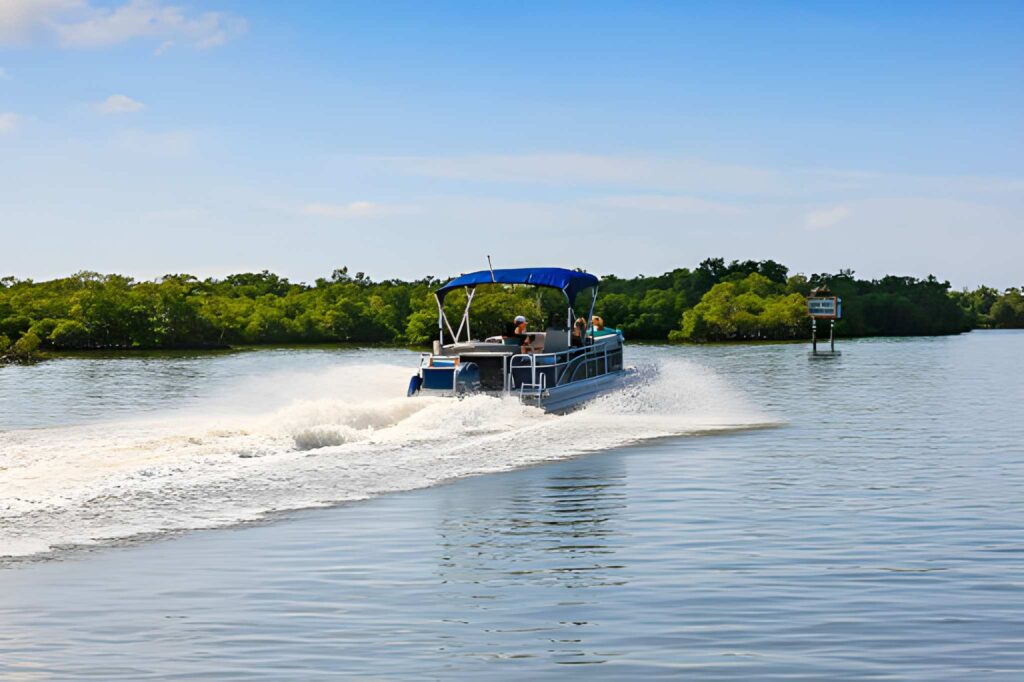
Pontoon boats are well-regarded for their stability and smooth ride, often outperforming single-hulled V-boats of similar size in choppy water. Their twin hulls and wide, flat deck provide excellent balance, making them ideal for families and casual boaters.
However, pontoons are not designed for open ocean conditions. Strong winds, large waves, or severe storms can still pose safety risks. Understanding your boat’s limits and checking weather conditions before heading out is essential for safe boating.
How Pontoons Handle Rough Water
Thanks to their twin-hull design and flat deck, pontoon boats are generally more stable than single-hulled vessels when navigating windy or choppy conditions. Unlike a V-hulled boat that cuts into the waves, a pontoon tends to ride on top of them, which provides a smoother and steadier experience.
Pontoon boats also have lower water displacement, meaning they push through less water as they move. This design helps reduce the impact of rough waves and makes sudden tipping or capsizing far less likely.
Overall, pontoons are well-suited for lakes, rivers, and inland waterways, offering a stable and reliable ride even when the water gets a bit rough.
Dangerous Conditions for Pontoon Boats
While pontoon boats are generally stable, certain conditions can still make them risky to operate. Large waves, strong winds, or severe storms can overwhelm the boat’s balance, potentially causing tipping or capsizing.
A heavy wave hitting the bow may push the pontoon under the water instead of letting it ride over, which is why extreme weather should always be avoided. Even multi-hull pontoons can struggle in unusually rough conditions.
As with any vessel, the safest course of action is to head to shore immediately if a storm approaches. Planning ahead, monitoring the weather, and understanding your boat’s limits are crucial steps to keeping everyone on board safe.
3 Tips to Keep Pontoon Boats Steady and Safe in Rough Water
1) Balance Weight Properly
One of the most important steps for safe pontoon boating is evenly distributing weight. This includes passengers, gear, coolers, fuel, and any other cargo on board. Uneven weight can shift the center of gravity, making the boat more prone to tipping or instability.
If your pontoon has modifications or add-ons like extra seating, storage units, or electronics make sure they do not affect the boat’s balance. Educate passengers about staying evenly spaced across the deck, especially when navigating choppy water or windy conditions.
Proper weight management is a simple but highly effective way to enhance stability and reduce safety risks on the water.
2) Upgrade Your Pontoon for Rough Water
If you often encounter choppy conditions or want to maximize your pontoon’s safety, certain upgrades and modifications can make a significant difference. These enhancements improve stability, handling, and overall performance in rough water.
Consider these modifications:
- Higher horsepower engine: Provides extra power to handle larger waves and maintain speed in challenging conditions.
- Power-assisted steering: Makes maneuvering easier and safer, especially in strong winds or heavy chop.
- Positive-angle lifting strakes: Help lift the pontoon over waves, improving speed and handling.
- Aluminum under-skin: Adding a sheet of aluminum under the hull reduces drag, minimizes water spray, and protects against debris damage.
- Barracuda nosecones: Enhance efficiency and create a smoother ride over rough water.
Implementing these upgrades can significantly increase your pontoon’s stability, giving you more confidence and control during rough-water boating.
3) Monitor Weather Conditions
Always check the weather forecast before heading out on your pontoon. Storms, high winds, or sudden changes in conditions can create dangerous situations on the water.
If you notice a storm approaching, return to shore immediately whenever possible. Acting quickly helps prevent accidents and keeps both passengers and the boat safe.
Keep in mind that docking during a storm can be challenging. Pontoons are large and high-profile, which makes them more susceptible to being pushed by strong winds. Using dock bumpers can protect your boat from damage.
If returning to shore isn’t feasible, consider anchoring in a safe spot. Staying stationary can be safer than attempting to navigate through heavy waves or rough water. Proper planning and vigilance are key to maintaining pontoon safety in adverse weather.
How to Navigate a Pontoon in Rough Water
When operating a pontoon in choppy or windy conditions, strategic navigation is key. Avoid heading directly into strong winds, as doing so increases the chance of hitting waves head-on and can make the ride unstable.
Wide turns are essential. Pontoons don’t handle sharp maneuvers easily, especially in rough water. Forcing tight turns can compromise stability and increase the risk of tipping.
Maintain steady speed. Slowing down might seem safer, but it can actually cause the bow to dip into the water, allowing waves to crash over the front. Instead, ride waves at a slight angle from the boat’s center. This technique helps keep the bow and one of the tubes elevated, allowing the pontoon to glide more smoothly over wave peaks and troughs.
By following these techniques, you can enhance control, reduce risk, and maintain stability when navigating rough waters in your pontoon.
Pontoon Handling in Coastal Waters
Pontoon boats are perfect for lakes and rivers, but they can be used in coastal waters if handled carefully. When venturing into the ocean or large bays, it’s best to stay close to shore or within sheltered inter-coastal areas, such as inlets and protected harbors.
If you plan to go further offshore, make sure you know how long it will take to return to safety in case the weather changes unexpectedly. Understanding your route, distances, and potential hazards is essential for safe coastal boating.
Several factors affect a pontoon’s performance in ocean conditions, including hull design, horsepower, and onboard equipment. Being prepared and cautious is key to maintaining stability and safety on open water.
Performance Considerations for Ocean Boating
If you plan to take your pontoon out into coastal or ocean waters, engine power is a critical factor. Unlike calm lakes or rivers, the ocean often produces larger waves and stronger currents, which require sufficient horsepower to maintain control and stability.
For safe offshore use, it’s generally recommended to have at least 150 horsepower. This ensures your pontoon can handle choppy conditions, maintain speed when needed, and navigate waves without putting passengers or the boat at risk.
Ensuring your pontoon is equipped with the right performance capabilities is a simple yet essential step for safe coastal boating.
How Construction Impacts Ocean Performance
The way a pontoon is built can make a big difference in handling larger waves. For those considering offshore use, a triple-hull design offers greater stability compared to standard double-hull models. If you’re in the market for a new pontoon, a triple-hull may be worth considering for added safety in rough water.
If you already own a double-hull pontoon, there are still construction features to check before heading into coastal waters:
- Tube size: Larger tubes (at least 25 inches in diameter) improve stability in bigger waves.
- Tube thickness: Aluminum sheets of .09 inches or more provide extra durability for ocean conditions.
- Regular maintenance: Saltwater can corrode aluminum, so it’s important to rinse hulls thoroughly after every trip.
- Protective coatings: Applying anti-fouling paint to tubes and under-skinning helps prevent corrosion and debris damage.
- Warranty checks: Confirm whether your manufacturer covers saltwater exposure to avoid unexpected issues.
By paying attention to hull design, tube size, and proper maintenance, you can maximize your pontoon’s safety and performance in coastal or ocean waters.
Frequently Asked Questions (FAQ)
Yes, pontoon boats are considered one of the safest boats for beginners due to their stability, flat deck, and easy handling.
Pontoon boats can handle moderate chop and wind, especially on lakes and rivers. Extreme weather and large ocean waves should be avoided.
Pontoons can be used in coastal waters if properly equipped, powered, and kept close to shore. They are not designed for open ocean conditions.
Conclusion
Pontoon boats are considered very safe in most boating conditions, especially on lakes and rivers. Their stable design makes them well-suited for recreational use, as long as extreme weather and severe water conditions are avoided.
For boaters who primarily enjoy inland waterways, a pontoon is an excellent choice. Coastal use is possible, but it requires careful planning, staying close to shore, and ensuring the boat is properly equipped for rougher water.
Safety ultimately comes down to preparation and knowledge. Proper weight distribution, suitable equipment, and correct handling techniques play a major role in how safely a pontoon performs in windy or choppy conditions.
It’s also important to remember that operator experience matters. Many boating accidents are caused by poor judgment or lack of understanding, particularly when weather conditions change quickly.
When a pontoon boat is built correctly, powered appropriately, well-maintained, and operated responsibly, it can provide a safe and enjoyable experience even in challenging conditions.