


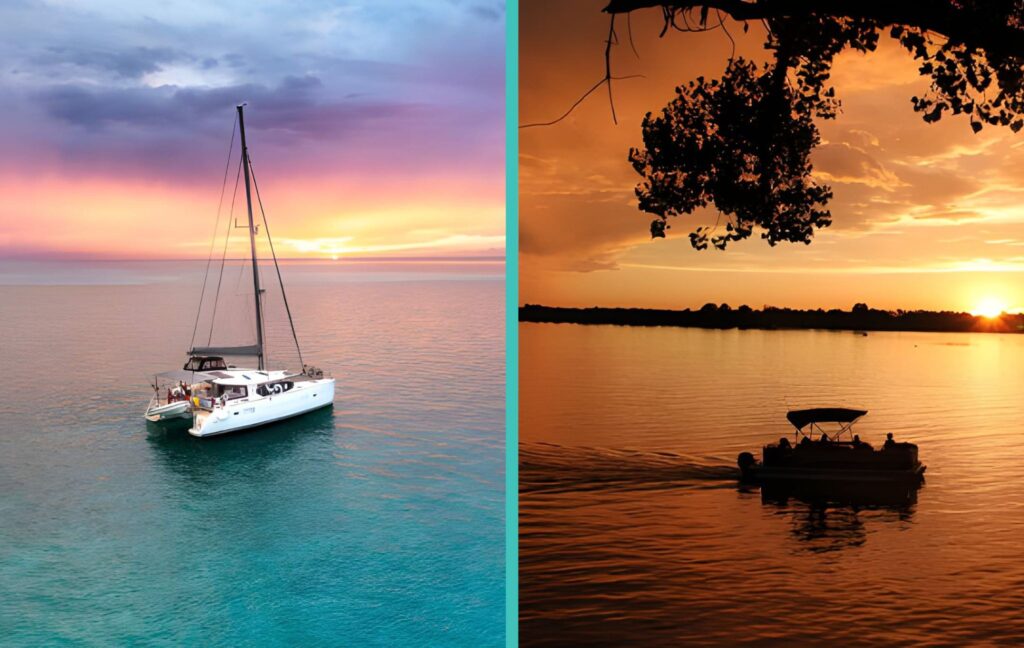
When it comes to picking the perfect boat, choosing between a catamaran and a pontoon boat can be surprisingly complex. Both types offer stability, space, and comfort on the water, but they are designed for very different experiences. From leisurely lake adventures to offshore sailing, each has unique advantages and trade-offs that you should understand before buying.
In this guide, we’ll explore the key differences between catamarans and pontoon boats, covering deck layouts, hull design, sailing capabilities, recreational use, and long-term maintenance. By the end, you’ll be able to choose the vessel that best matches your lifestyle, whether you plan for calm water relaxation, high-performance sailing, or extended boating trips.
Deck Space Comparison: Catamaran vs Pontoon Boat
One of the most noticeable differences between pontoon boats and catamarans is the design and use of deck space. Pontoon boats feature a flat deck supported by two or more buoyant aluminum pontoons, depending on size. These pontoons are purely structural, they keep the boat afloat but aren’t intended for storage or entry. This results in an open, unobstructed deck, making pontoon boats ideal for social gatherings, sunbathing, or entertaining on calm lakes and rivers.
Catamarans take a different approach. Their twin hulls support the deck while providing functional interior space for storage, cabins, or living quarters on larger models. Because the hulls are accessed from the deck, some space is taken up by hatches, stairways, or entry points. Many catamarans also include an enclosed helm or salon, giving the captain a sheltered cockpit with excellent visibility, something standard pontoon boats usually don’t offer.
When comparing boats of similar length, pontoon boats often provide more open deck space, perfect for leisure activities or moving freely around the boat. However, catamarans are frequently wider and longer, allowing larger models to surpass smaller pontoons in overall deck area while offering additional amenities below deck. For those prioritizing open-air socializing, pontoons excel, but for a combination of outdoor space and interior functionality, catamarans provide a more versatile solution.
Hull Space: Functionality and Storage Differences
The hulls reveal one of the most significant functional differences between these two boat types. Pontoon hulls are entirely enclosed beneath the deck and serve mainly to keep the boat afloat. They provide stability, are lightweight, and require minimal maintenance, but offer no additional living, storage, or operational space. This simplicity makes pontoons perfect for recreational outings where open deck space and ease of use are the priority.
Catamarans, by contrast, make their hulls versatile. Larger models often include multiple cabins and bathrooms within the twin hulls, enabling overnight stays, extended cruising, or even ocean voyages. Mid-sized catamarans may use one hull as a compact galley, making long trips comfortable and self-sufficient. Even smaller catamarans provide accessible hull storage for equipment, supplies, and safety gear.
This dual-purpose hull design gives catamarans a clear advantage in versatility, though it slightly reduces deck space compared to a pontoon of similar length. While pontoons maximize open-air enjoyment, catamarans balance deck usability with functional interior space, appealing to sailors who value both comfort and practicality on the water.
Sailing Capabilities: Why Catamarans Outperform Pontoon Boats
When it comes to sailing, catamarans and pontoon boats are fundamentally different. Pontoon boats are designed for calm waters, leisure cruising, and recreational activities, but they lack sails, keels, and hydrodynamic hulls, making true sailing impossible. They excel in stability at rest, open deck space, and shallow-water navigation, but wind-powered travel is not an option.
Catamarans, in contrast, are engineered for sailing across a wide range of conditions, from tranquil lakes to open oceans. They vary in size, from small recreational sailing cats suitable for weekend outings to large ocean-going models built for long-distance cruising. A key advantage of catamarans is their stability: unlike traditional monohulls, they resist heeling, allowing passengers to move comfortably even in strong winds.
While monohulls provide tactile feedback that helps sailors “feel” the wind beneficial for beginners catamarans offer smoother motion, minimal tilting, and more spacious deck and cabin layouts. This makes them ideal for families, groups, or long-term cruisers who prioritize comfort without sacrificing performance.
For serious sailing, a catamaran is clearly the better choice. Their twin-hull design, combined with sail rigging, enables versatile use, from casual day trips to extended offshore adventures.
| Feature | Catamaran | Pontoon Boat |
|---|---|---|
| Sailing Capability | Designed for sailing with mast, sails, and rigging | Not designed for sailing |
| Ocean Suitability | Suitable for coastal and open-ocean voyages | Limited to calm inland waters |
| Stability Under Sail | Very high, minimal heeling | Stable at rest, unstable in waves |
| Wind Efficiency | Highly efficient wind-powered travel | No wind propulsion |
| Range | Long-distance, fuel-independent sailing | Limited by fuel capacity |
Racing Potential: Catamarans vs Pontoon Boats
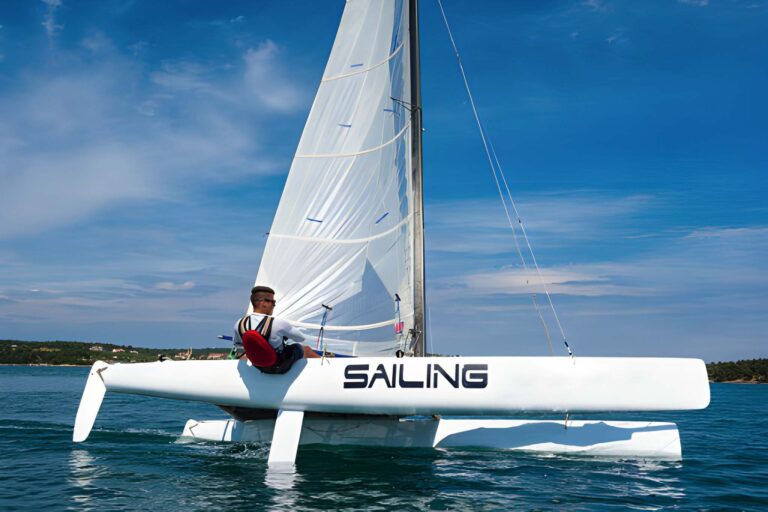
Catamarans are designed for racing and performance, while pontoon boats prioritize stability and leisure cruising.
If you’re considering racing, the difference between catamarans and pontoon boats is stark. Pontoon boats are designed for stability, social enjoyment, and leisure cruising, they lack sails, hydrodynamic hulls, and the agility required for competitive racing. You won’t see them in regattas or sailing competitions.
Sailing catamarans, by contrast, are built for performance. From small, agile models like Hobie Cats to larger cruising cats, these boats can participate in racing and spirited recreational sailing. While they don’t tilt as dramatically as monohull racing sailboats, catamarans excel in speed, stability, and responsiveness, making them popular for both casual and club-level racing.
Even motorized versions of catamarans and pontoons can reach high speeds on calm waters, but only catamarans offer the maneuverability and design for competitive sailing. Pontoon boats remain focused on comfort and stability rather than performance.
If racing is your goal recreational or competitive a sailing catamaran is the clear choice. Pontoon boats are best for leisure, social activities, and relaxed cruising.
| Aspect | Catamaran | Pontoon Boat |
|---|---|---|
| Competitive Racing | Common in sailing races and regattas | Not used for racing |
| Speed Potential | High under sail or motor | Moderate, comfort-focused |
| Handling | Responsive and performance-oriented | Slow turning, leisure-focused |
Recreational Options: Catamarans vs Pontoon Boats
Both catamarans and pontoon boats offer unique recreational experiences, but the activities you enjoy will determine which vessel suits you best. Pontoon boats shine in comfort, space, and leisure cruising, while catamarans excel in performance, versatility, and adventurous sailing.
Pontoon Houseboats
These floating havens offer expansive decks with diving platforms, water slides, sunbathing areas, and often full kitchens and bedrooms inside. Perfect for family trips, parties, or weekend getaways on lakes and rivers, they prioritize comfort and social gatherings.
Standard Pontoon Boats
Ideal for day trips, casual cruising, and water sports. Open decks with seating, grills, and entertainment options make them beginner-friendly. Their shallow draft allows access to coves, islands, and sandbars, while they can tow skiers, tubes, and kneeboards.
Portable Fishing Pontoons
Compact pontoons that fit in a pickup truck bed, expandable on the water into a full deck. These boats are perfect for anglers and weekend adventurers needing stability and portability in remote lakes or rivers.
Hobie Sailing Catamarans
Small, lightweight, and trailerable, Hobie cats are great for day sailing, short coastal trips, or recreational racing. They offer responsive handling for beginners and experienced sailors alike.
Ocean-Cruising Catamarans
Designed for long offshore voyages, these twin-hull vessels provide stability, multiple cabins, fully equipped galleys, and ample storage. Perfect for coastal exploration, island hopping, and extended sailing adventures.
Comparison of Recreational Activities
| Activity | Catamaran | Pontoon Boat |
|---|---|---|
| Social Cruising | Good | Excellent |
| Water Sports (tubing, skiing) | Moderate | Excellent |
| Overnight Trips | Excellent | Limited (except houseboats) |
| Sailing & Adventure | Excellent | Not suitable |
| Shallow Water Access | Good | Excellent |
Your choice depends on the water activities you enjoy, travel distance, and desired onboard amenities. Pontoon boats are perfect for relaxation and social gatherings, while catamarans offer adventure, sailing, and long-range exploration.
Why Catamarans Excel at Ocean Voyages
For long-distance sailing and offshore adventures, catamarans clearly outperform pontoon boats. While both float and offer recreational use, their design differences make catamarans the preferred choice for ocean-faring journeys.
Structural Integrity and Hull Design
Ocean-ready catamarans are built to Category A standards, able to withstand winds over 40 knots and waves higher than 13 feet. Their twin-hull configuration enhances stability and efficiently distributes weight, making them safer in rough waters. In contrast, pontoon boats are designed for calm lakes and rivers, with flat decks and single-deck pontoons that cannot handle open-ocean conditions.
Sailing Capabilities
Catamarans harness wind power through sails, allowing long voyages without relying on fuel. Pontoon boats depend entirely on motors and are limited by fuel capacity. Even if reinforced, a pontoon would lack the engineered hull design and stability necessary for safe offshore travel.
Draft and Maneuverability
Catamarans typically have a shallow draft relative to size, allowing access to shallow anchorages and coastal islands. Pontoon boats are not designed for variable ocean depths or extended open-water navigation.
Ocean-Ready Features
Many catamarans include watertight compartments, reinforced decks, and below-deck accommodations, ensuring comfort and safety on long passages. Pontoon boats prioritize recreational space over seaworthiness and generally lack these amenities.
While pontoon boats excel on calm inland waters, catamarans are the clear choice for ocean adventures, island-hopping, and long-range sailing. Their stability, sail power, reinforced construction, and intelligent hull design ensure both safety and performance in conditions where pontoon boats simply cannot compete.
Boat Size Comparison
Typical Sizes
Catamarans are often built for long-distance and open-water use, requiring larger, more robust construction. Ocean-capable catamarans typically range from 35 to 50 feet, with some luxury models exceeding 60 feet. This size allows for expansive deck space and substantial interior accommodations, including multiple cabins, bathrooms, and fully equipped galleys.
Pontoon boats, by contrast, are generally smaller and more compact, averaging around 22 feet long, with most models between 20 and 30 feet. These dimensions suit calm lakes, rivers, and protected bays, making them ideal for recreational cruising, fishing, and water sports, but unsuitable for rough water or long-distance travel. Pontoon houseboats are an exception, sometimes reaching lengths similar to smaller catamarans, but they lack the structural reinforcement needed for offshore voyages.
Structural Advantages
Catamarans’ twin-hull design distributes weight efficiently, providing balance and stability even at larger sizes a crucial factor for open-water performance. Pontoon boats, with their flat, buoyant pontoons, do not scale as effectively; larger models can become less stable and are prone to rocking in choppy waters.
While pontoon boats excel on calm inland waters, catamarans’ size and engineering make them the superior choice for ocean cruising, extended sailing trips, and family adventures on larger bodies of water. In this case, size isn’t just about comfort it directly impacts performance, safety, and versatility on the water.
Cost Considerations
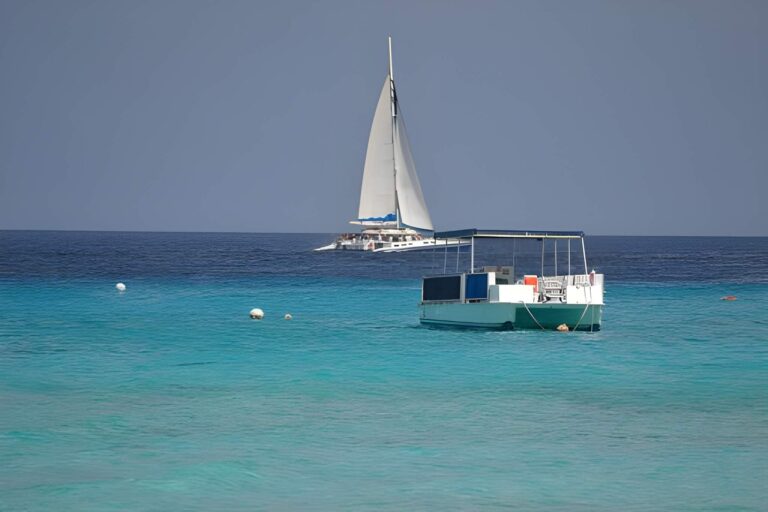
Catamarans generally have higher purchase prices and maintenance costs, while pontoon boats are more affordable and easier to maintain.
Entry-Level vs Luxury
Catamarans and pontoon boats occupy very different market segments. Entry-level sailing catamarans, such as small Hobie models, can be found for under $10,000, making them accessible to beginners. Most ocean-capable catamarans, however, start around $100,000 and can exceed $1 million for luxury models with multiple cabins, fully fitted galleys, advanced navigation systems, and reinforced hulls for offshore adventures.
Pontoon boats are generally more affordable. Standard recreational pontoons, typically 20-30 feet long, range from $15,000 to $50,000. Small portable pontoons for pickup trucks can cost under $5,000, while larger houseboat-style pontoons with multiple decks and entertainment features can reach into the hundreds of thousands.
Fuel, Maintenance, and Resale
Catamarans usually have low fuel dependency for sailing models but higher maintenance costs due to sails, engines, and onboard systems. They tend to hold their value well over time. Pontoon boats rely entirely on engines, require less maintenance, and generally depreciate faster initially.
Making the Right Choice
Choosing between a catamaran and a pontoon boat depends on your intended use, water conditions, and budget. For calm lakes or rivers, a small or used pontoon boat may provide excellent value. For ocean sailing, extended trips, or family-friendly multi-day adventures, a catamaran offers unmatched space, safety, and versatility, even if the upfront investment is higher.
| Category | Catamaran | Pontoon Boat |
|---|---|---|
| Average Purchase Price | $100,000 – $1,000,000+ | $15,000 – $50,000 |
| Entry-Level Options | Small sailing cats under $10,000 | Portable pontoons under $5,000 |
| Fuel Dependency | Low (sailing models) | High (engine only) |
| Maintenance Cost | High (sails, engines, systems) | Low to moderate |
| Resale Value | Holds value well | Depreciates faster initially |
Maintenance Considerations
Catamarans generally require more maintenance than pontoon boats due to their complexity, materials, and onboard systems. Understanding these upkeep requirements helps potential buyers plan for long-term costs and effort.
| Maintenance Area | Catamaran | Pontoon Boat |
|---|---|---|
| Engines | Usually twin engines | Single outboard engine |
| Sails & Rigging | Regular inspection required | Not applicable |
| Hull Material | Fiberglass (needs care) | Aluminum (low maintenance) |
| Interior Systems | Plumbing, electrical, cabins | Minimal systems |
1. Engines and Mechanical Systems
Motor catamarans usually have dual engines, meaning double the components to inspect, service, and repair. Pontoon boats generally have a single outboard, making maintenance simpler and cheaper. Catamarans provide redundancy and higher performance, but require more attention to mechanical upkeep.
2. Sail and Rigging Maintenance
Sailing catamarans introduce sails, masts, and rigging that must be regularly inspected, cleaned, and maintained. Neglect can lead to failures far from shore. Pontoon boats have no sails or complex rigging, making them low-maintenance for casual boating.
3. Materials and Hull Care
Catamarans are mostly fiberglass, which requires cleaning, waxing, and inspection to prevent scratches, chips, or leaks. Pontoon boats are usually aluminum, dent-resistant, lightweight, and easier to maintain over time, though they can dent with hard impacts.
4. Living Quarters and Interior Maintenance
Catamarans often include cabins, galleys, and bathrooms that require cleaning, ventilation, and occasional repairs. Pontoon boats typically lack interior spaces, aside from basic seating or small cabins on houseboats. More interior means more maintenance but allows multi-day trips.
5. Systems and Electronics
Ocean-capable catamarans come with advanced navigation, electrical, and water systems, all requiring regular checks to ensure reliability. Pontoon boats usually feature simpler electronics, making upkeep easier and more affordable.
Catamarans offer superior performance, comfort, and versatility but require higher maintenance effort. Pontoon boats are easier and cheaper to maintain, ideal for day trips, calm lakes, or rivers. Your choice depends on your boating ambitions, budget, and willingness to perform regular maintenance.
Resale Value and Depreciation: Catamaran vs Pontoon Boat
When buying a boat, resale value and depreciation are critical factors that affect your long-term investment. Catamarans and pontoon boats depreciate differently due to their market demand, rarity, and intended use. Understanding these trends can help you make a smarter purchasing decision.
1. Depreciation Trends for Pontoon Boats
Pontoon boats typically lose value rapidly in the first few years. New pontoons can depreciate 20%-30% within three years. After this initial drop, depreciation slows and stabilizes. Buying a 2-3 year-old pontoon often provides nearly the same functionality at a much lower cost. Mass production and wide availability keep the used market competitive, making pontoon boats affordable options for budget-conscious buyers.
2. Catamaran Resale Value
Catamarans generally retain higher resale value. Limited supply and strong demand help stabilize prices in the used market. Well-maintained sailing or cruising catamarans may retain 70%-80% of their value after several years, especially ocean-capable models. However, finding the right used catamaran can take time, as the market is more niche and selective compared to pontoon boats.
3. Tips for Buyers
- Pontoon Boat Buyers: Buy a used pontoon 2-4 years old to avoid steep initial depreciation. Check the deck, upholstery, and motor for wear.
- Catamaran Buyers: Compare new and used models carefully. Paying more for a newer, well-maintained catamaran can be worth it, especially for long-term cruising or ocean travel.
4. Factors That Affect Depreciation
Several variables influence how much value a boat retains over time:
- Material and build quality: Fiberglass catamarans tend to hold value better than aluminum pontoons.
- Engine hours and maintenance: Well-maintained engines and regular servicing increase resale value.
- Model rarity and size: Larger, ocean-going catamarans are harder to replace, making them more valuable.
- Market trends: Popularity differences between pontoon boats for lakes and catamarans for ocean adventures affect demand.
Pontoon boats depreciate faster initially but are easier to replace or purchase used at a discount, ideal for casual or budget-minded buyers. Catamarans retain value better over time due to scarcity, size, and specialized use, appealing to those seeking a long-term investment and ocean-going capabilities.
DIY Boat Projects: Catamaran vs Pontoon Boat
For boating enthusiasts who love hands-on projects, building your own boat can be rewarding and cost-saving. However, the feasibility of DIY construction differs greatly between catamarans and pontoon boats.
1. DIY Catamarans: Challenging but Possible
Building a catamaran from scratch is complex, especially for larger ocean-going models. Precise calculations for hull balance, weight distribution, and stability are essential. Small sailing catamarans may be within reach for dedicated DIYers with the right skills, tools, and workspace.
- Materials: Fiberglass or marine-grade plywood are commonly used, requiring specialized skills in molding, laminating, and waterproofing.
- Scale limitations: Large cruising catamarans (30-40+ feet) are generally unsuitable for DIY construction due to safety and precision needs.
- Practicality: Experimental PVC or aluminum-frame catamarans exist, but are limited to calm waters and short distances.
2. DIY Pontoon Boats: Versatile and Accessible
Pontoon boats are far more DIY-friendly thanks to their simple floating platform design. They’re ideal for custom builds, from fishing boats to floating cabins.
- Pontoon houseboats: Used pontoons (often under $10,000) can be outfitted with cabins, small kitchens, and sleeping quarters for affordable, personalized boats.
- Small-scale pontoons: Builders often repurpose barrels, 55-gallon drums, or PVC pipes to create compact pontoons for lakes or calm rivers, perfect for learning or experimentation.
- Customization: Pontoon boats allow endless modifications, from water slides to fishing platforms and tailored seating arrangements.
3. Key Takeaways for DIY Builders
- Skill level: Small pontoon projects suit beginners, whereas catamarans require advanced skills in woodworking, fiberglass, and marine engineering.
- Budget: DIY pontoon builds can cost a few thousand dollars; even a small DIY catamaran may exceed $10,000 including materials and safety gear.
- Safety: Always prioritize flotation, hull integrity, and adherence to boating regulations. Improper construction can pose significant risks.
Pontoon boats offer far more DIY opportunities than catamarans. Whether building a floating cabin, custom fishing platform, or small experimental boat, pontoons provide flexibility, affordability, and safety. Catamarans, while possible on a small scale, are best left to professional construction due to their complexity and ocean-going requirements.
Alternative Boats Worth Considering: Catamaran vs Pontoon Boat
When deciding between a pontoon boat and a catamaran, it’s helpful to explore other boat types that serve similar purposes or meet similar needs. Understanding these alternatives can help you find a vessel that better matches your lifestyle and boating goals.
| Boat Type | Best For | Compared To |
|---|---|---|
| Deck Boat | Family cruising & water sports | Pontoon Boat |
| Jon Boat | Fishing & small lakes | Pontoon Boat |
| Airboat | Shallow or swampy waters | Pontoon Boat |
| Monohull Sailboat | Traditional sailing experience | Catamaran |
| Cabin Cruiser | Overnight coastal trips | Catamaran |
| Yacht | Luxury & long-distance cruising | Catamaran |
For Pontoon Boat Enthusiasts
Pontoon boats are known for their spacious decks, social versatility, and calm-water performance. Other options to consider include:
- Deck Boats: Wide decks, open seating, and smooth handling make them ideal for family outings, water sports, or group cruising. Similar to pontoon boats but often with slightly higher performance.
- Airboats: Perfect for shallow waters, swamps, or marshlands. Less focused on comfort but excel in unique environments.
- Jon Boats: Lightweight and compact, great for fishing and small lakes. Affordable, easy to transport, and highly versatile, though with less social or recreational space.
For Catamaran Enthusiasts
Catamarans excel in stability, sailing, and long-distance cruising. Alternatives worth considering include:
- Monohull Sailboats: Single-hull sailboats provide classic sailing experiences with noticeable heeling. Often more affordable but may require more skill in rough waters.
- Yachts: Offer luxury, comfort, and extended cruising. Suitable for ocean travel or high-end living spaces on the water, similar to larger cruising catamarans.
- Cabin Cruisers: Smaller than yachts but with cabins, galleys, and bathrooms. Ideal for overnight trips and coastal cruising, offering comfort without the complexity of a catamaran.
Making the Right Choice
Matching your boat to your intended use is key:
- Social gatherings, calm lakes, or family cruising: Pontoon boats, deck boats, or Jon boats excel.
- Sailing adventures, ocean cruising, or stability in rough waters: Catamarans, monohulls, and yachts are better suited.
- Balanced needs for comfort and versatility: Cabin cruisers or hybrid designs can offer the best of both worlds.
Exploring these alternative boats alongside the traditional catamaran vs pontoon comparison helps ensure you choose a vessel that fits your budget, lifestyle, and intended water activities.
Final Thoughts: Choosing Between a Catamaran and a Pontoon Boat
Choosing between a catamaran and a pontoon boat depends on your boating goals, lifestyle, and the type of waters you plan to navigate. Both offer unique advantages, making them ideal for different experiences.
- Pontoon Boats: Best for social cruising, shallow water access, and versatile recreational activities on lakes and calm rivers.
- Catamarans: Shine in stability, sailing performance, and ocean-capable design, making them perfect for longer trips, offshore adventures, and sailing enthusiasts.
Ultimately, there is no single “right” boat for everyone. By understanding the differences between pontoons and catamarans, from deck layouts and hull design to sailing capabilities, maintenance, and cost you can make an informed decision that aligns with your personal boating lifestyle and goals.